

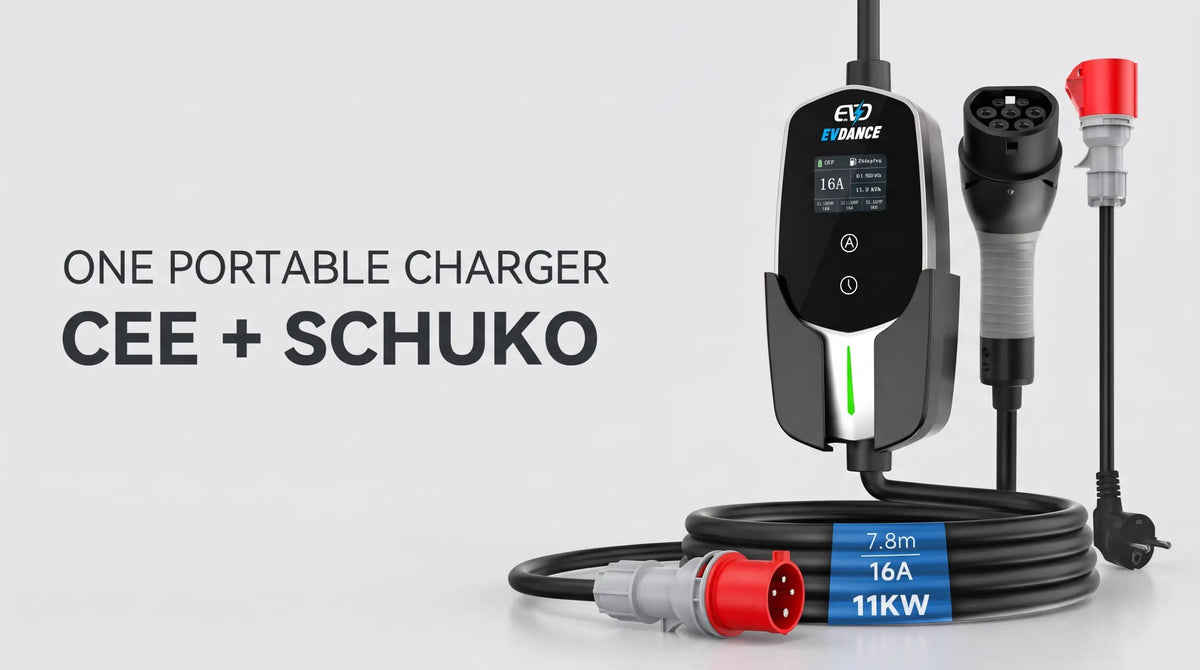
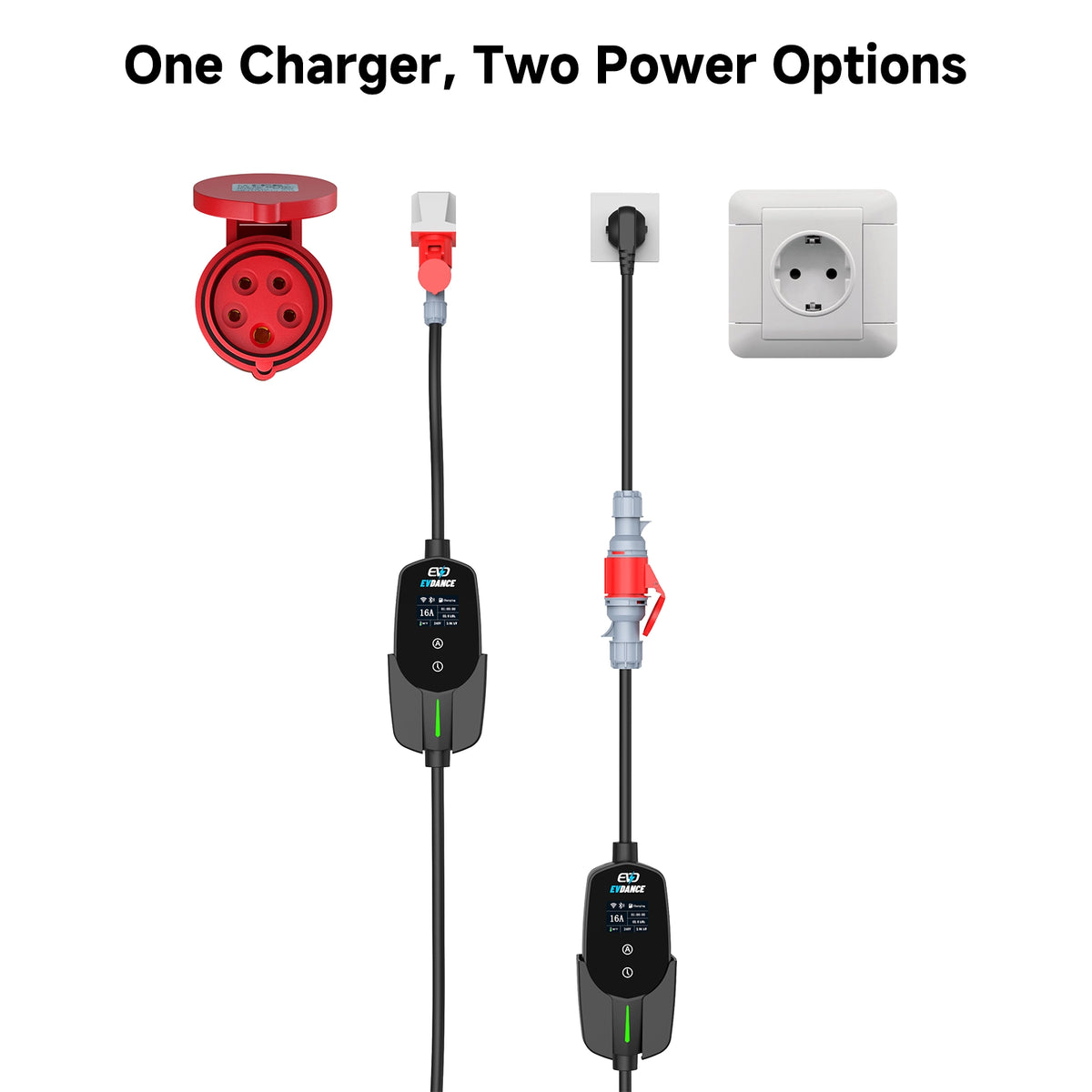
A portable EV charger supplied with a compatible Schuko adapter can cover two different charging situations. It can connect directly to a suitable 400 V three-phase CEE 16A socket for charging at up to 11 kW, while the adapter allows it to use a compatible 230 V Schuko socket at a lower power level.
The charger remains the same, but the available power changes with the electrical connection. This type of setup is most useful for drivers who regularly encounter both socket types.
One Charger, Two Types of Power Supply
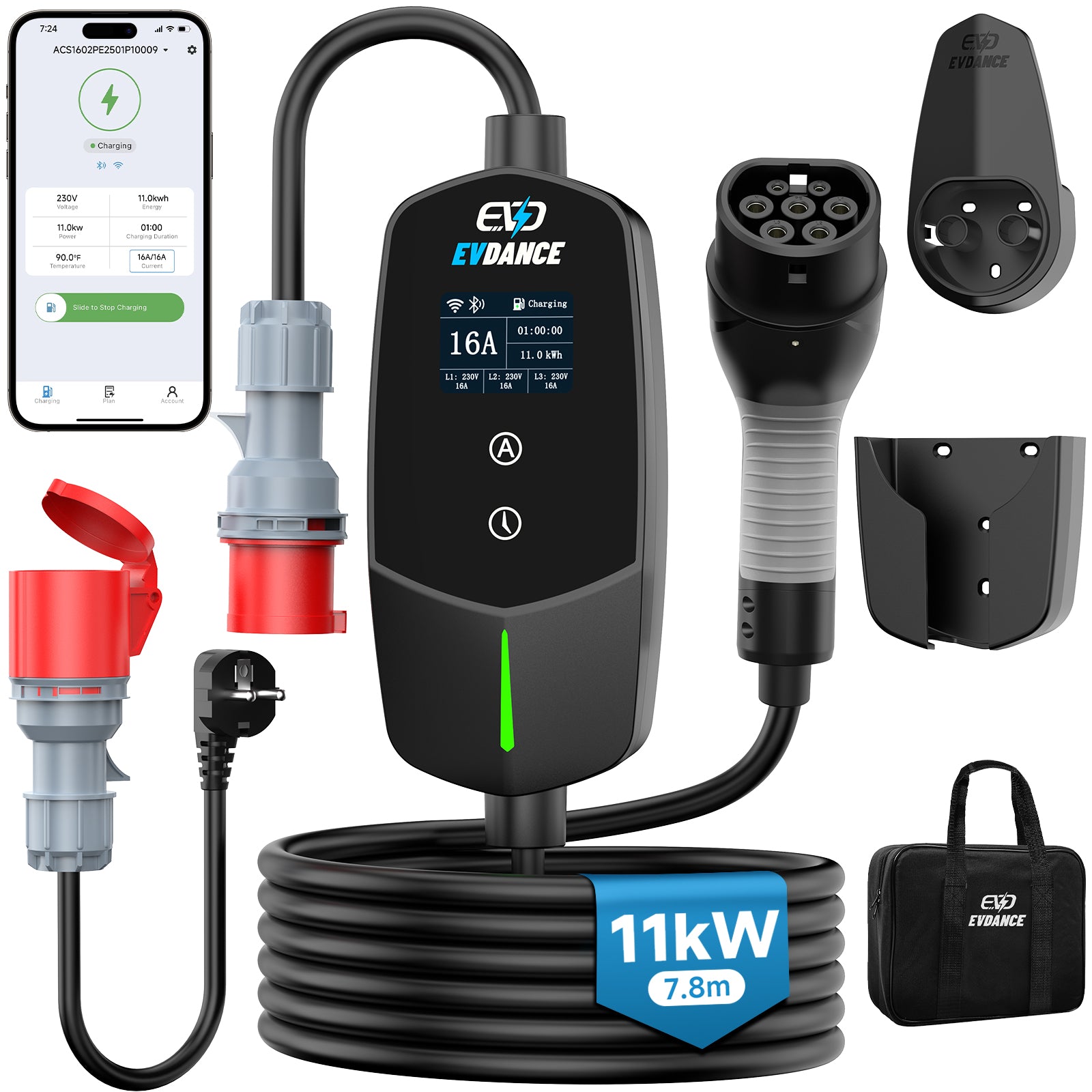
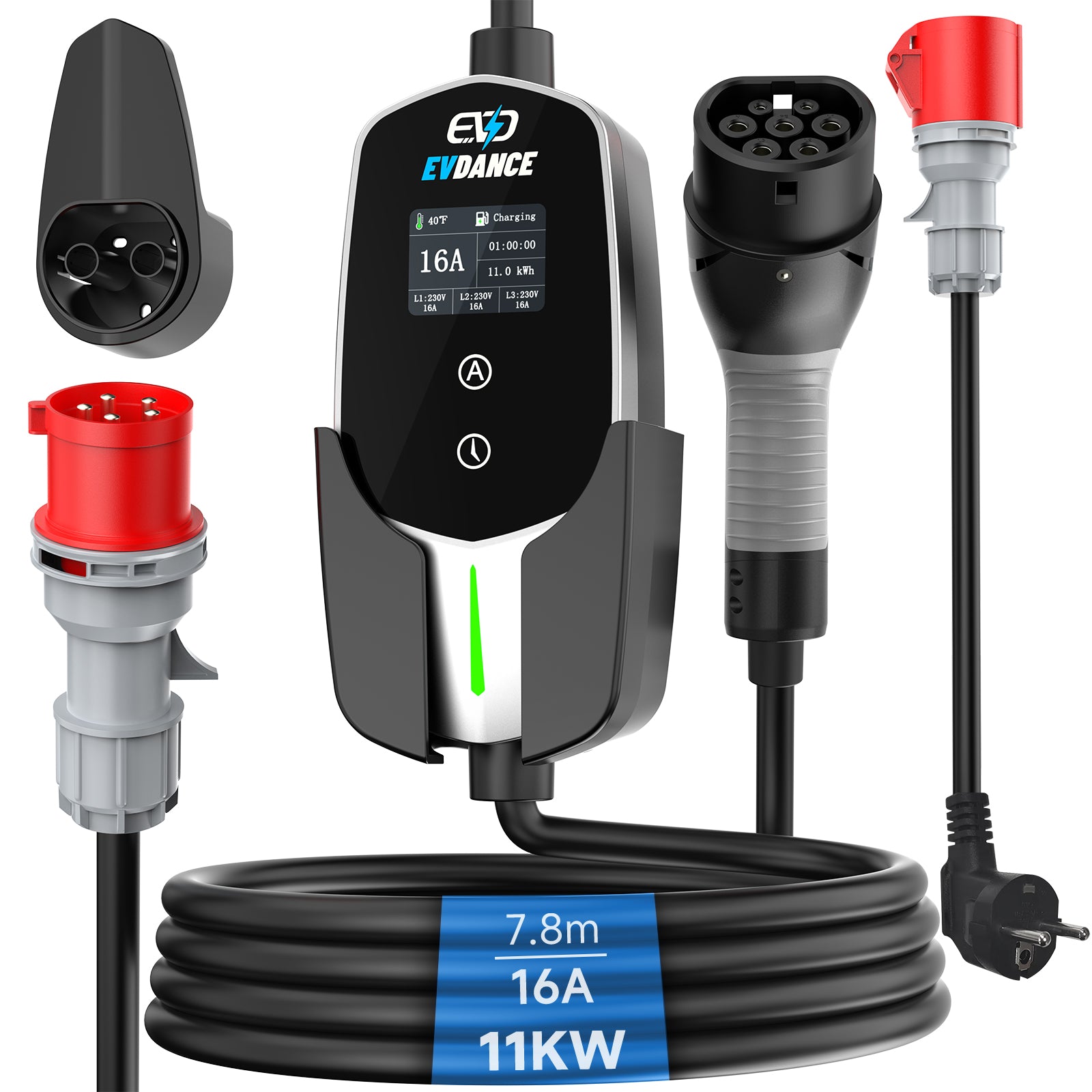
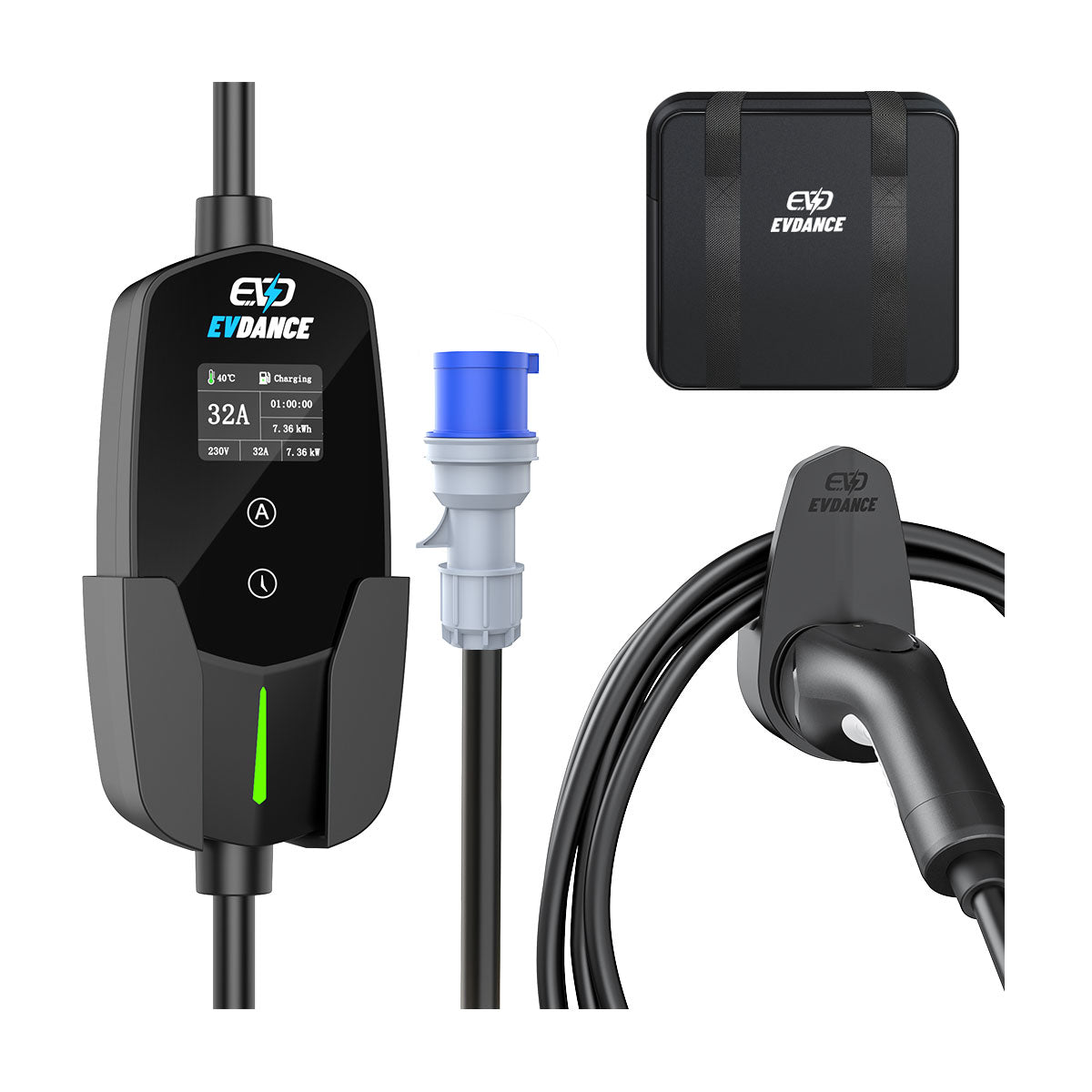
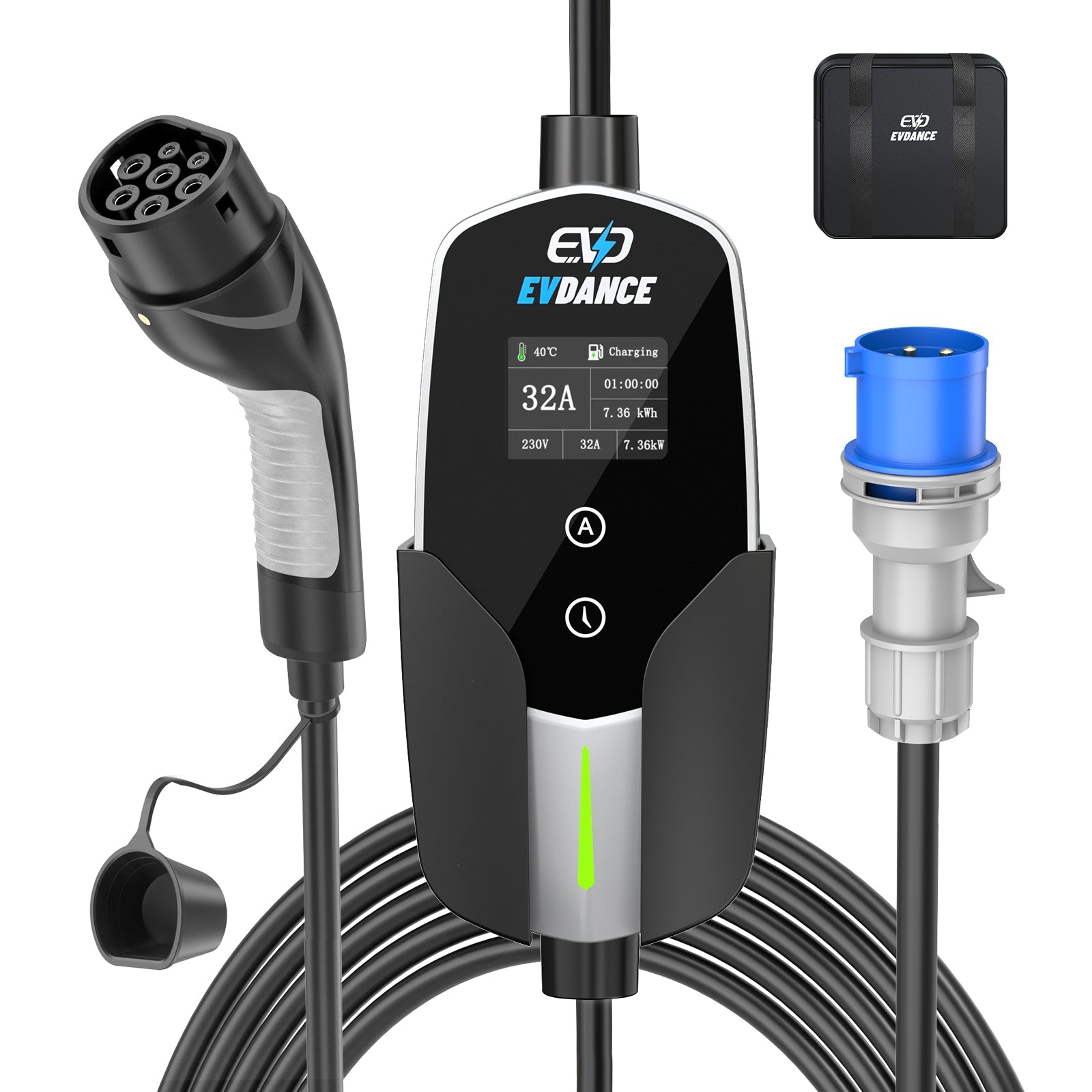
The charger’s standard CEE plug connects directly to a compatible red CEE 16A socket. With the correct three-phase supply and a vehicle that supports 11 kW AC charging, this connection can provide up to 11 kW.
The Schuko adapter is fitted between the charger’s CEE plug and a compatible household socket. The Type 2 connector on the vehicle side does not change.
The adapter therefore changes how the charger receives electricity, not how it connects to the car. It also does not convert a household socket into a three-phase CEE supply.
What Changes with Each Connection?
| Feature | Direct CEE connection | Schuko adapter |
|---|---|---|
| Power supply | 400 V three-phase | 230 V single-phase |
| Available charging power | Up to 11 kW with a compatible vehicle and supply | Lower power, limited by the socket, circuit and selected current |
| Typical situation | Regular charging at home, a garage or workplace | Second residence, travel or occasional backup |
| Vehicle connection | Type 2 | Type 2 |
| Equipment used | Portable charger | Same charger with its compatible adapter |
The main difference is the power available from the socket. A compatible CEE connection can supply three-phase power, while a Schuko socket normally provides single-phase household power.
Charging through the adapter will therefore be slower than charging directly from a suitable CEE socket. The exact result depends on the socket, electrical circuit, selected current and vehicle.
Where a 2-in-1 Charger Is Most Useful
This setup can suit a driver who normally charges from a CEE socket at home but also visits a second residence where only a Schuko socket is available.
Instead of carrying two complete chargers, the driver can use the CEE plug for the main charging location and add the compatible adapter when the second connection is needed.
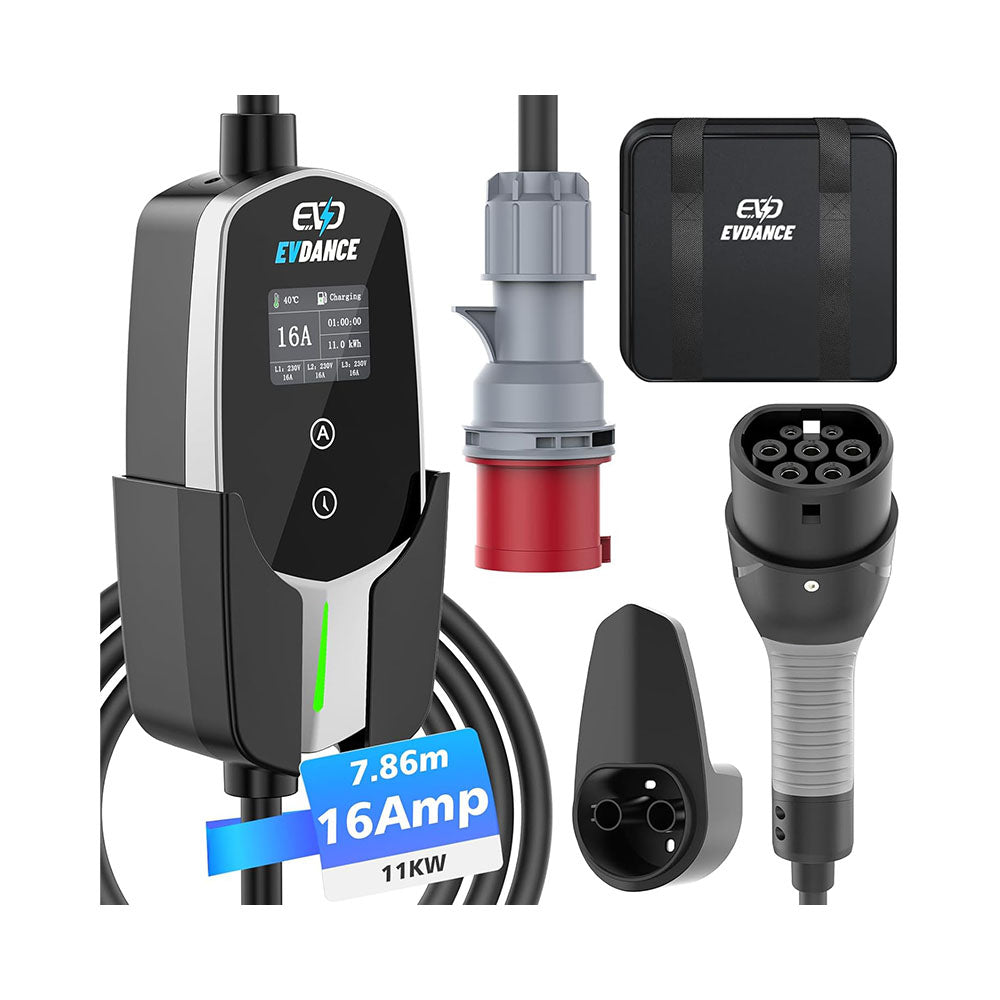
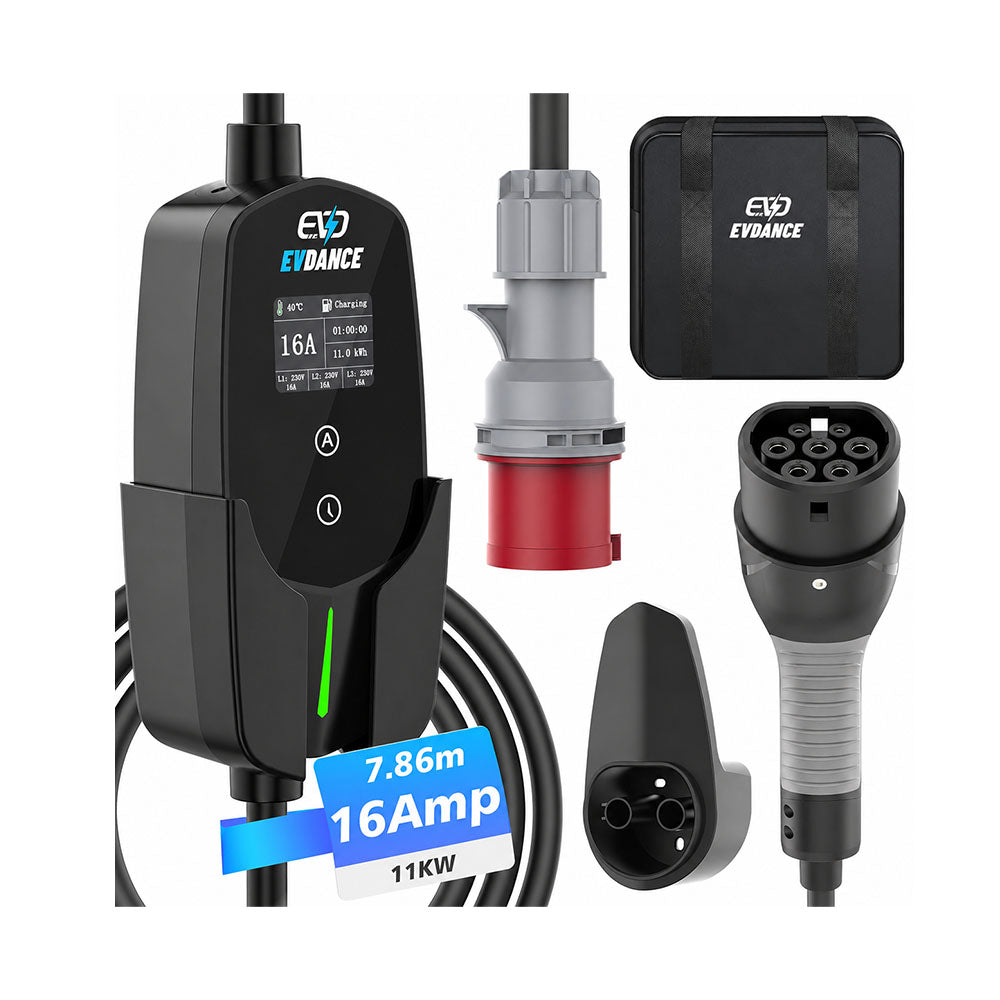
The EVDANCE 11 kW portable EV charger with CEE and Schuko adapter combines these two connection options in one portable setup. It supports 6–16 A adjustable current, allowing the charging current to be selected for the available connection.
A Schuko socket should still be treated as a separate charging environment. The adapter adds another connection option, but it does not confirm that every household socket is suitable for EV charging.
When a Single-Connection Charger May Be Enough
Not every driver needs both connection types. If the vehicle is normally charged from the same CEE socket and there is no plan to use a Schuko connection, a standard CEE mobile wallbox may provide everything required.
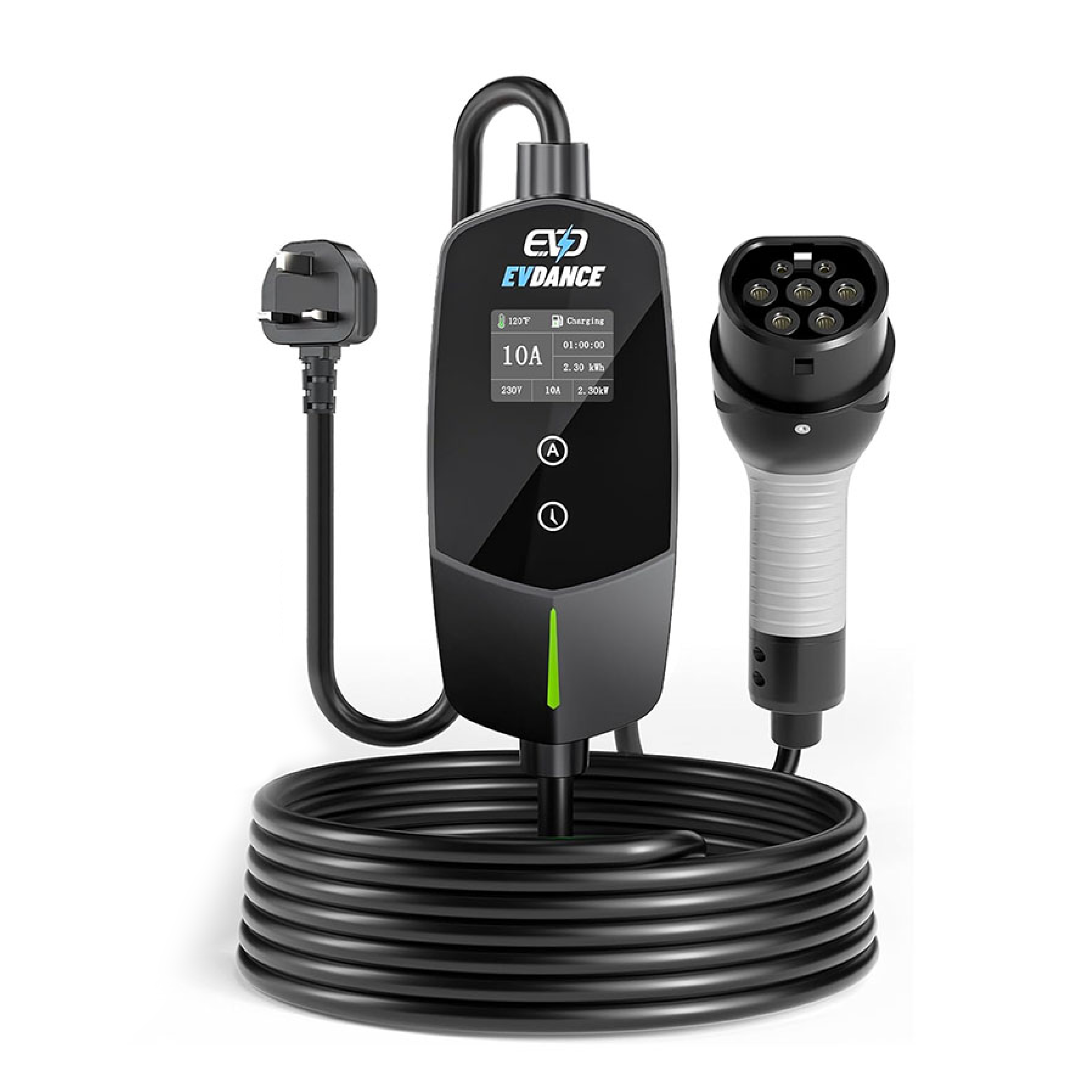
The same applies in the opposite situation. If the available charging locations only provide suitable Schuko sockets and 11 kW three-phase charging is not required, a dedicated Schuko portable charger may be the more direct option.
The practical choice depends on the sockets that will actually be used. The value of a 2-in-1 setup comes from covering two regular charging situations, not simply from including an additional adapter.
Check the Connection Before Charging
Only use an adapter that is specifically designed and approved for the charger. A physically compatible third-party adapter does not necessarily have the correct electrical design or current rating.
The socket and circuit should be suitable for the selected charging current. When changing from CEE to Schuko, check the current setting again rather than assuming that the previous setting is appropriate.
The connection should not be used if the socket, plug or adapter is loose, visibly damaged, discoloured or unusually warm. Lowering the current is not a substitute for addressing a damaged connection.
Two Connections for Different Charging Situations
A CEE and Schuko 2-in-1 portable charger is most useful when both connections form part of the driver’s normal routine. The CEE plug provides the main high-power charging option, while the Schuko adapter adds flexibility at suitable locations without a CEE socket.
Drivers who only use one type of socket may prefer a simpler single-connection charger. For those who regularly move between two known charging locations, one compatible charger and adapter can reduce the amount of equipment that needs to be carried.
Recommend Reading: Schuko or CEE: Which EV Charger Is the Better Fit?






Share:
EVDANCE 11 kW Chargers Compared: Basic, App or RFID Wallbox?